This story was published in partnership with Verite News
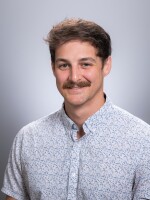
Jeffrey Alford had been living in active addiction for five years when, in August 2020, he was arrested on a felony charge of possession of a Schedule II drug and booked at the Jefferson Parish jail.
Like many others who struggle with opioid use disorder, Alford started with prescription pain pills, then he moved on to heroin and methamphetamines. When powerful synthetic opioids like fentanyl flooded the market, he started using them too — whether he realized it or not.
“You didn’t know what you were getting,” Alford said. “You thought you were getting heroin, but you’re actually getting fentanyl.”
The 2020 charge was his third felony, he said. He was looking at an enhanced sentence as a habitual offender.
After sitting in jail for months awaiting his court date, a prosecutor from the Jefferson Parish District Attorney’s Office offered him a deal that would allow him to avoid prison time. Rather than taking his case to trial, where Alford would likely face conviction and prison time, it could be diverted to drug court, a specialty court designed to provide a treatment-based alternative to traditional incarceration for people with nonviolent charges. He accepted the deal.
Alford successfully completed the program — showing up early before work for drug screenings, attending two years of mandatory group therapy and meetings with judges and anything else the court required — and has stayed off drugs since.
For the past three years, he’s worked as a peer support specialist with the Jefferson Parish Human Services Authority, where he said he uses his own experience with opioid addiction to connect with people still struggling. It’s an approach that he believes is “more person-centered” than how a police officer might handle the situation.
Alford’s journey with opioid addiction ended in recovery. For many others, it ends in death — especially in Jefferson Parish.
The conservative-leaning, suburban parish — where many move to for lower property taxes and quieter neighborhoods than in neighboring New Orleans — has the highest rate of opioid-related overdoses in Louisiana, more than any other parish in the state, according to data published by the Louisiana Department of Health.

The death toll is a consequence, experts say, of a tidal wave of prescription opioids and an under-resourced public health infrastructure. In the last five years alone, there have been 1,162 drug overdose deaths recorded by the Jefferson Parish Coroner’s Office. The vast majority of those deaths involved opioids.
Sarah Babcock — who advises the Jefferson Parish government on public health — said that many residents are shocked when she tells them that the parish is among the hardest hit when it comes to the opioid crisis.
“Often when I show people this data … people say that’s not ours, that you must be looking at it regionally, like this is a New Orleans problem,” Babcock said.

But a few years ago, Jefferson Parish got a once-in-a-generation opportunity to address its opioid problem. State and local governments around the country had sued major pharmaceutical manufacturers, distributors and drug store chains over the massive costs they’d incurred — for law enforcement, addiction treatment and medical care, among other services — dealing with the opioid addiction crisis. In recent years, the companies settled. Nationwide, the settlements total nearly $60 billion — of which Louisiana is set to receive approximately $640 million.
Of that, Jefferson Parish is set to receive more than $65 million — the largest allotment of any Louisiana parish. The money, which was to be distributed in pieces over 18 years, began to flow in 2023.
So far, parish leaders have said they plan to use the settlement money to finance the construction of a brand new building for its drug court, which is currently housed at a two-story Salvador A. Liberto Building in Gretna — with the parish planning to issue $17 million in bonds backed by the settlement funds. At the time, parish leaders said a new building would help increase the capacity of the drug court.

So far, that is the largest commitment that the parish has announced in regard to how it plans to spend settlement funds. However, three years in, most of the early tranches of money have yet to be spent. (The council also allocated $500,000 to the homeless services center last year. About one-third of people experiencing homelessness are also struggling with substance abuse.)
According to records obtained by Verite News and Gulf States Newsroom, in 2023 and 2024, the parish used approximately $216,000 of settlement money on a contract with architectural firm Burgdahl & Graves, a frequent contractor and political donor in Jefferson Parish. The invoice billed for hours spent on “preliminary design” of the new drug court building.
Jefferson Parish’s 24th Judicial District Court has operated the drug court since 1997. While participants regularly meet with judges at the courthouse, the typical drug court probation also involves regular meetings with case workers, weekly group therapy and mandatory drug screenings that all happen at the building in Gretna.
Jefferson Parish’s choice to spend its settlement money on the construction of a new drug court building stands in contrast to New Orleans, where settlement money has largely been directed toward harm reduction strategies and the conducting of a needs assessment survey.
Alford went through drug court in Jefferson Parish. He is the first to acknowledge that it was life-changing to be offered an off-ramp from incarceration and into drug court. Still, he has mixed feelings about the program.
“As far as the specialty program went, it wasn’t very helpful for my sobriety,” he said, adding that he felt that the judges were more focused on strict compliance — threatening to extend time in the program or put someone in jail with any misstep or relapse — than the messy realities of recovery.
What really helped him, he said, was the access to treatment that drug court mandates — but does not provide itself. And it’s those resources that he thinks are most needed in Jefferson Parish right now.
“The system itself has got to change,” he said. “I mean, you get a new building, you’re putting the same people in it. You’re doing the same thing. There’s no reform, there’s no change.”

Babcock, the public health adviser, tried to steer Jefferson Parish leadership toward using settlement money to bolster public health infrastructure. According to emails obtained by Verite News and Gulf States Newsroom, in 2022, as opioid overdoses continued to climb and the parish was preparing to receive its first tranche of settlement money, Babcock sent a memo to parish leadership recommending that the parish use settlement money for “building out preventative programs or initiatives” before shifting funding to treatment and supportive services.
The construction of a new drug court building was not among Babcock’s recommendations.
According to Babcock, while drug court can be a valuable resource for people involved in the criminal justice system, it is not a resource available to everyone impacted by the opioid epidemic — many of whom have never been jailed and charged with a crime.
“Drug court itself does not provide any of the services,” Babcock said. “To get treatment, people [in drug court] are still having to go to the same community services that everyone else is trying to get into.”
She said that across the region there are not enough detox beds, inpatient programming or options for long-term residential recovery programs.
“So drug court is a good use of funding, but it can’t be the sole direction of that funding,” she said.
Parish President Cynthia Lee Sheng did not respond to repeated requests for comment, nor did any of the seven current members of the Jefferson Parish council — instead directing Verite News and Gulf States Newsroom to public health officials, who hold no official decision-making power over how the parish allocates opioid settlement dollars.

‘The most pressing need’

Louisiana is unique among states in that it is directing virtually all of its opioid settlement money to local governments. That arrangement was reached in a 2021 deal inked by then-Attorney General Jeff Landry. Landry, who was later elected governor, also decided that the settlement money would be split 80-20 between parish governments and sheriffs’ offices — creating the largest carve-out for sheriffs of any state.
Settlement funds are intended to be spent on an approved list of opioid abatement strategies, primarily focused on treatment and prevention, though other expenditures — including on law enforcement — are allowable.
In Louisiana, parish governments are required to submit annual reports to a state task force that not only detail what they are spending funds on but also specify which approved abatement strategy each expenditure meets. (Sheriffs’ offices are not required to report their expenditures.) Despite the annual reporting requirements, not all parishes have submitted reports and oversight over settlement spending is weak, with a toothless task force called the Louisiana Opioid Abatement Task Force, overseeing local spending.
The choice to spend settlement money on the construction of a new drug court building was a plan championed by Jefferson Parish councilmember Marion Edwards, who, during his time as a district court judge in the parish in the 90s, had spearheaded the creation of the parish’s first drug court. Edwards retired from the council in early 2025.

Edwards said he was inspired to start the first drug court back in 1997, in part, because of his time working for the parish District Attorney’s Office during the onset of the crack cocaine epidemic in the ‘80s. Back then he said, the office was flooded with drug-related crimes. He felt that the typical prosecutorial playbook of charging people as repeat offenders — guaranteeing that they would have to serve longer sentences — didn’t address the root causes of many of these crimes.
“While I was first assistant DA, I had a lot of contact by mothers and fathers and grandmothers and grandfathers, begging for help for their kids who were addicted to drugs,” Edwards said. “They would not want them to go to jail. They would want them to be treated for the drug addiction problem they had.”
Edwards said that after he visited a drug court in Colorado, he tried to convince the judges of the 24th District Court to start their own version in Jefferson Parish, but they weren’t interested. But then he won a seat on the bench in 1996. The next year, he started the parish’s first drug court.
For Edwards, drug courts — and other specialty courts focused on treatment-based intervention as opposed to incarceration — provide a meaningful opportunity for people with substance use disorders to get access to treatment and social services.

“When I left the drug court … our recidivism rate among those people that had graduated from drug court was right at 10%,” he said. “So it was obviously working. For years, we led the country in per capita involvement in drug court and in per capita graduation from drug court.”
Edwards said the biggest constraint facing the drug court is square footage. The program cycles hundreds of people in and out for drug screens, group sessions and court dates, all in a cramped two‑story building, which he believes caps how many people the court can realistically serve and how robust the services can be. In his mind, a larger, purpose‑built space would let Jefferson Parish expand treatment slots, add more kinds of programming and move people through the system more smoothly.
“There’s so much more we could do with drug court if we had the space,” Edwards said.
However, while drug courts can provide access to treatment and social services, they can also be costly and time-consuming for the people involved in programming, who typically are enrolled for 18 to 24 months.
Alford said that he paid $200 per month to participate in drug court, costing him thousands of dollars over the course of his probation. The requirements of drug court could also be difficult to schedule around, especially while trying to hold down a job, with randomized mandatory drug screenings, sometimes multiple times a week. And drug court could be punitive: Any misstep, like a failed drug test, could lead to a week or two of jail time and more months in probation. Because of this, treatment didn’t always feel front and center during his time in drug court.
Jonathan Stoltman directs the Opioid Policy Institute, a nonprofit that tracks how communities spend opioid settlement money nationwide. He said Jefferson Parish’s approach raises a fundamental question.
“When I think of money spent on a drug court, my first question is always, how was that identified as the most pressing need for this money?” he said.
Drug courts aren’t necessarily a bad use of funds, Stoltman said. But it puts treatment at the discretion of judges, who may or may not know best practices when it comes to addiction medicine. A judge might assume that “going cold turkey” — stopping all drug and alcohol use immediately and without additional support — is better than medication-assisted treatment.
“A judge isn’t a doctor. And when we think about a medical issue, we should be having people working with doctors, not with judges,” he said.

A tale of two parishes

One of the reasons that Jefferson Parish has been far more devastated by the opioid crisis than New Orleans is because of the sheer volume of prescription pills distributed in the parish.
Beginning in the 1990s, pharmaceutical companies flooded the market with painkillers, with doctors writing hundreds of millions of prescriptions. Later, in the 2010s, when pills got harder to find, heroin, then fentanyl, rushed in to fill the gap.
But those prescriptions were not distributed evenly across different locales. In 2019, using federal data, The Washington Post found that the distribution of prescribed opioids could vary dramatically county by county, or parish by parish — and often correlated, later on, to higher opioid mortality rates.
From 2006 to 2012, 190 million prescribed opioids were distributed in Jefferson Parish, more than any other parish in the state. Approximately 50 million pills were distributed in Orleans Parish during that same time frame. In addition to over-prescription of opioids, the epidemic was also worsened by a lack of public health infrastructure, especially resources suited to addressing substance use disorder.
“Understandably, a lot of blame goes towards the companies for creating the crisis,” Stoltman said. “But the crisis was a crisis because we had no public health infrastructure to respond to it, or the public health infrastructure was inadequate.”
Before advising Jefferson Parish, Babcock worked for the city of New Orleans from 2013 until 2021. In 2017, as New Orleans was facing a dramatic uptick in opioid-related deaths, the city’s health department worked to distribute naloxone across city services, using geographic data provided by the city’s Emergency Medical Services to map where overdose calls were occurring. The Health Department used that data to then figure out where to distribute naloxone.
This was part of a strategy called harm reduction, an evidence-based public health approach that seeks to offer resources that minimize the risks associated with drug use — like offering fentanyl test strips, clean syringes and naloxone to those who use drugs — and is shown to be an effective public health approach, increasing the likelihood that people who use drugs will enter treatment, lowering mortality rates and the spread of disease.

“So, personally, what I’ve seen as I’ve worked in both parishes is that Orleans Parish took a much more proactive response stance early on in this epidemic, and Jefferson Parish has, in many ways, moved slower to address it,” Babcock said.
Babcock joined the Jefferson Parish government in 2021. She said she was hired in response to the COVID-19 pandemic, which emphasized the parish’s need for better public health infrastructure. Given her experience in New Orleans — and the fact that she bore witness to how effective public health intervention could be to reduce opioid-related mortalities — Babcock provided guidance to Jefferson Parish leaders on some ways that they might spend opioid settlement dollars.
In her 2022 memo to Jefferson Parish leaders, she provided a list of initiatives she thought the settlement dollars should fund, such as the creation of a parish-wide Behavioral Health Coordinator position; expanding the availability of naloxone, fentanyl testing strips and other harm reduction strategies; funding treatment programs; and increasing the number of medication-assisted treatment providers, among other items.
Still, the next year, when the parish was set to receive its first disbursements of settlement money, Jefferson Parish leaders decided to commit that money to the construction of a new drug court building.
New Orleans took a different approach. It used early settlement funds to continue its harm reduction programming, but it also conducted a needs assessment survey to determine the best use of funds. As a result of that survey, the city chose to dedicate opioid settlement money to continuing to fund naloxone distribution across the city, plus law enforcement diversion initiations, outpatient assisted treatment programs and a substance use mobile resource clinic, according to Dr. Jennifer Avegno, the city’s deputy mayor for health and human services.

Unlike New Orleans, Jefferson Parish officials did not appear to conduct a needs assessment survey or work to develop a long-term plan for how best to use opioid settlement dollars — outside of the recommendations made by Babcock.
Babcock told Verite News and Gulf States Newsroom that Jefferson Parish is in the middle of conducting a general Community Health Assessment, which will provide an overview of the various health needs in the parish, including when it comes to substance abuse. She also said that in the years since she sent that memo, she has been approached by Lee Sheng and Jefferson Parish council members, asking for advice on how to best spend opioid settlement dollars.
With last year’s allocation to the homeless center, there does appear to be some movement toward using the dollars on some of Babcock’s initial recommendations. And Dr. Rosanna DiChiro, the executive director of the Jefferson Parish Human Services Authority, told Verite News and Gulf States Newsroom that she is advocating for the use of opioid settlement money to expand medication-assisted treatment options and peer support services in the parish – hiring more people with lived experience of opioid addiction, like Alford.
For all of his frustration with drug court, Alford doesn’t want to see it disappear. He knows better than most what it meant, in that moment, to have an alternative to incarceration..
“I didn’t know a single thing about treatment until I went to jail,” he said.
Alford understands firsthand that substance abuse often comes with a host of other challenges, from trauma to poverty to isolation from loved ones. He wants to see the settlement money spent to address the circumstances surrounding addiction — and meaningfully help those living with addiction.
“A very important aspect of recovery nowadays is not only being aware of how that person feels or what they’re going through but also being able to give some type of solution for it,” Alford said.

This story was produced by the Gulf States Newsroom, a collaboration between Mississippi Public Broadcasting, WBHM in Alabama, WWNO and WRKF in Louisiana and NPR. Support for public health coverage comes from The Commonwealth Fund.