

Alan Greenblatt
Alan Greenblatt has been covering politics and government in Washington and around the country for 20 years. He came to NPR as a digital reporter in 2010, writing about a wide range of topics, including elections, housing economics, natural disasters and same-sex marriage.
He was previously a reporter with Governing, a magazine that covers state and local government issues. Alan wrote about education, budgets, economic development and legislative behavior, among other topics. He is the coauthor, with Kevin Smith, of Governing States and Localities, a college-level textbook that is now in its fourth edition.
As a reporter for Congressional Quarterly, he was the inaugural winner of the National Press Club's Sandy Hume Memorial Award for Excellence in Political Journalism, which is given to outstanding reporters under the age of 35. Sadly, he no longer meets that requirement.
Along the way, Alan has contributed articles about politics and culture for numerous publications, including The New York Times, Washington Post and the San Francisco Chronicle. He is happy to be working for an outlet where he has been able to write about everything from revolutions in the Middle East to antique jazz recordings.
Alan is a graduate of San Francisco State University and holds a master's degree from the University of Virginia.
-
 Over the past year, four lieutenant governors have resigned amid scandal. Lieutenant governors may not have much power, but they're certainly capable of getting into trouble.
 -
 With his career put at risk by scandal, New Jersey Gov. Chris Christie held an epic-length news conference on Thursday. Taking questions for two hours was part of his overall message, which is that he has nothing to hide.
 -
 Certain issues brook no dissent. But how do media outlets decide if and when a strong enough consensus has emerged to safely dismiss other viewpoints?
 -
 Teachers, film producers and restaurant owners — among many other groups — face higher tax bills in 2014. More than 50 temporary tax breaks are expiring at midnight on New Year's Eve, but many of them are likely to be restored when Congress returns.
 -
 Stories that titillate, amuse or arouse flash-in-the-pan outrage may be more widely read and shared than solid information. Celebrity and scandals have always attracted media attention, but in the Internet age, the balance is shifting more toward entertainment.
 -
 By example and personal wealth, Bloomberg has changed not just city management in New York but also the way mayors all over the country approach their jobs. He steps down Jan. 1.
 -
 A recent survey shows that furloughs and hiring freezes conspired to dampen morale. But if federal workers are feeling undervalued, their job security remains high.
 -
 Politicians around the country — and around the globe — continue to embrace the most basic symbols as a means of getting their points across more powerfully to voters.
 -
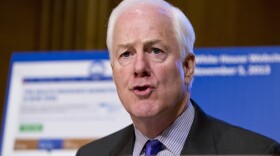 Cornyn's voting record ranks him as the second most conservative Republican in the Senate. But some on the right feel he was insufficiently supportive of Sen. Ted Cruz's effort to defund Obamacare, and now he faces a primary challenge from Steve Stockman, a Houston-area House member.
 -
 Groups such as Americans for Prosperity were hoping to rouse opposition to a budget package that raises short-term spending. House Speaker John Boehner says such groups have lost their credibility.


