WWNO/WRKF reached out to all candidates, asking them to answer questions on hot-button issues like coastal restoration, data centers, regulation of AI and more. Only three of them responded. You can read their answers below.
The following candidates responded to a questionnaire sent by WWNO/WRKF:
Chauna Banks (D)
- Baton Rouge
- Metro-Councilwoman 2013 - 2024
- 20 years experience in education
- Chaunabanksforcongress.vote

Abortion/Reproductive health
My Christian faith teaches me that life is sacred, and I personally value the sanctity of life. However, I also recognize that reproductive healthcare involves deeply personal and sometimes medically complicated circumstances.
I do not believe the government should criminalize women or physicians for legitimate medical decisions. There must be appropriate consideration for circumstances involving the life and health of the mother, rape, incest, nonviable pregnancies, and serious medical complications.
These decisions should involve the woman, her physician, her family when appropriate, and her faith—not politicians attempting to practice medicine.
I also believe our discussion of protecting life must extend beyond pregnancy. If we are genuinely pro-life, we must care about maternal mortality, infant mortality, prenatal and postpartum healthcare, affordable childcare, nutrition, safe housing, education, foster care and adoption, and whether families have the economic resources necessary to raise healthy children.
My goal is to reduce unintended pregnancies, protect women's health, support mothers and babies, strengthen families, and make certain women have access to accurate information and quality reproductive and maternal healthcare.
Carbon Capture Sequestration and Eminent Domain
I recognize that carbon capture and sequestration may have a role in Louisiana's energy and industrial future, particularly as traditional industries seek ways to reduce emissions while remaining economically competitive.
However, I will not support carbon capture simply because a corporation labels a project "green" or because significant investment is attached to it. These projects must be evaluated based upon science, safety, environmental impact, groundwater protection, pipeline safety, emergency preparedness, long-term monitoring, and the impact upon the communities where the infrastructure will actually be located.
I am especially concerned about the use of eminent domain for privately driven carbon-capture projects. Eminent domain is an extraordinary governmental power. It should never become a convenient mechanism for taking someone's property primarily to advance a private corporation's economic interests.
Property owners deserve due process, transparency, meaningful community engagement and fair compensation where eminent domain is legally justified.
Economic development cannot come at the expense of people's property rights, health, safety, or quality of life.
Coastal restoration work in LA
I strongly support Louisiana coastal restoration and believe it must remain a major federal priority. Our coast protects homes and communities, but it also protects ports, energy infrastructure, fisheries, navigation routes, industries and economic assets that serve the entire United States. Louisiana has sacrificed a great deal environmentally while helping fuel and move America's economy.
Federal investment should continue in wetlands restoration, hurricane protection, flood mitigation, drainage, resilient infrastructure, sediment projects and other scientifically supported approaches to protecting and rebuilding our coast.
I will also fight to make certain Louisiana receives its fair share of federal offshore-energy revenues and that money dedicated to coastal protection actually reaches the communities and projects for which it was intended.
Coastal restoration is environmental policy, but it is also economic policy, infrastructure policy and protection of Louisiana's future.
Data Centers
I support technology and innovation, and I want Louisiana to compete for the industries and high-paying jobs of the future. That includes data centers and the infrastructure necessary to support artificial intelligence.
However, I do not believe every large economic-development project should receive a blank check from taxpayers simply because it promises jobs and investment. Data centers can require extraordinary amounts of electricity, water, land and infrastructure. Therefore, I support a staged approach to development, ongoing impact assessments, transparency regarding energy and water consumption, and community investment agreements when companies receive substantial public incentives.
Those agreements should include measurable commitments involving local hiring, workforce development, education, infrastructure, local and small-business contracting, and investment in the communities hosting these facilities. We must also protect existing residential and small-business utility customers. Families should not see unreasonable increases in their utility bills because enormous corporations require massive amounts of electricity.
I support economic development, but economic development should benefit the community—not merely happen in the community.
Federal Regulation of AI
I view artificial intelligence as a tool. Like any tool, AI can be used to educate, innovate, improve healthcare, increase productivity and create economic opportunity. It can also be used for fraud, discrimination, manipulation, identity theft, misinformation, and other harmful purposes. Therefore, I believe federal regulation should primarily focus on how AI is used and the harm caused by particular applications, rather than attempting to broadly regulate technology simply because it is artificial intelligence.
Federal protections are appropriate in areas including privacy, cybersecurity, fraud, discriminatory algorithms, children's safety, intellectual property and AI-assisted decisions involving employment, lending, housing, healthcare, education, insurance and government services.
We must also prepare American workers for technological change. I support investments in AI education, technical training and workforce development so that our citizens are not merely consumers of the technology but developers, entrepreneurs and workers participating in the wealth it creates. America must remain competitive in AI while making certain technology serve people—not the other way around.
FEMA reform
Louisiana understands natural disasters better than most states, and our residents also understand the frustration of attempting to navigate FEMA after experiencing one.
FEMA needs meaningful reform.
Disaster victims should not have to become federal-policy experts simply to receive assistance. Applications should be simplified, inspections expedited, communication improved, appeals made understandable, and assistance delivered more quickly.
FEMA must also recognize that Louisiana communities have different circumstances. Federal disaster policy cannot always be administered through a one-size-fits-all approach developed in Washington.
Most importantly, we must invest more aggressively before disasters occur.
It is fiscally irresponsible to repeatedly spend billions of dollars rebuilding communities while underinvesting in drainage, flood protection, elevation, resilient construction, coastal restoration and other mitigation measures.
FEMA should become as serious about prevention and resilience as it is about disaster response.
Immigration enforcement
I believe the United States has the right and responsibility to secure its borders and enforce its immigration laws. I support strong enforcement against human trafficking, drug trafficking, violent criminal activity, organized crime and individuals who legitimately threaten public safety or national security.
However, I reject rhetoric that characterizes every immigrant as a criminal. Immigration enforcement must be constitutional, humane and consistent with due process.
Congress has avoided comprehensive immigration reform for far too long. We need secure borders, adequate Border Patrol resources, functioning immigration courts, sufficient judges and personnel, an efficient legal immigration process, protections for legitimate asylum seekers, and accountability for employers who knowingly exploit undocumented labor.
I also support establishing a rigorous earned legal pathway for qualifying long-term residents who have established lives in America, obeyed our laws and meet clearly established requirements. We can protect our borders and enforce our laws without abandoning America's humanity.
Offshore drilling for oil and gas
I support responsible offshore oil and gas exploration and production. Louisiana's oil and gas industry supports thousands of families, small businesses and communities and remains important to America's energy security. I do not support policies that attempt to abruptly dismantle an industry while our country continues to depend upon the energy it produces.
I also support strong worker-safety and environmental standards and believe corporations must be held accountable when negligence causes environmental damage.
Louisiana deserves a fair share of the revenues generated from offshore production because our coast and communities bear much of the impact associated with supporting America's energy needs.
At the same time, Louisiana must prepare for the future. Emerging energy technologies should represent an expansion of opportunity for Louisiana workers—not abandonment of today's workforce. We can protect traditional energy jobs while simultaneously preparing our workforce for new industries.
Should members of Congress be prohibited from owning/trading stock?
Yes. I support prohibiting members of Congress from actively trading individual stocks while serving in office. Members of Congress receive briefings, conduct investigations, appropriate billions of federal dollars and write legislation that can affect individual companies and entire industries.
Public officials should never use privileged governmental information for personal financial gain, nor should we maintain a system that creates the reasonable appearance that they could.
Members should still be permitted to participate in retirement accounts, diversified mutual funds, broad-market funds and similar investment vehicles that do not present the same direct conflict.
Public service should never become an avenue for private enrichment.
Should elected officials be allowed to sign NDAs?
As a general principle, I do not believe elected officials should sign nondisclosure agreements that prevent them from revealing information the public has a legitimate right to know.
There are legitimate circumstances in government requiring confidentiality—national security, certain personnel matters, pending litigation, protected personal information and legitimate proprietary information are examples.
But an NDA should never be used to conceal corruption, harassment, misconduct, conflicts of interest, misuse of taxpayer dollars or governmental actions that should properly be subject to public scrutiny. An elected official works for the people.
Therefore, transparency should be the rule and secrecy should be the narrowly defined exception.
If you’ve held office before, what legislation are you most proud of and why?
I had the privilege of serving three terms—12 years—on the East Baton Rouge Metropolitan Council, representing District 2. I am proud of a body of work that focused heavily on economic and community development, second chances, healthcare access, housing opportunities, neighborhood revitalization, and recreational growth, expansion and maintenance.
One of the legislative initiatives I am most proud of was In My Father's House. I understood that adjudicated, abandoned and blighted properties are more than physical eyesores. They affect surrounding property values, public safety, neighborhood stability and people's willingness to invest in a community. In My Father's House created an opportunity for eligible adjudicated properties to be transferred to qualifying organizations and returned to productive community use. It represented the type of government I believe in: instead of allowing property to remain abandoned indefinitely, find a lawful and creative mechanism to transform a community liability into a community asset.
I am equally proud of my work on Ban the Box/Fair Chance employment policies.
My position was based upon a simple belief: if we truly believe people can be rehabilitated, then society must provide them an opportunity to become productive again. Employment is one of the most important factors in allowing someone who has paid a debt to society to support a family, establish stability and avoid returning to the criminal-justice system. Fair Chance hiring does not mean ignoring someone's history or preventing an employer from conducting an appropriate background review. It means allowing an applicant's qualifications to be considered before automatically excluding that individual because of a criminal-history checkbox. My work ultimately included extending Fair Chance hiring principles to contractors and subcontractors doing business with the City-Parish government.
But I do not define my 12 years of public service by one ordinance.
Some of the work of which I am most proud involved economic and community-development projects that increased healthcare access, expanded housing options, encouraged economic investment and supported the growth, expansion, improvement and maintenance of recreational facilities. I consistently argued that economic development and community development must occur together.
That philosophy was reflected in my establishment of the #NBRNOW Blue Ribbon Commission, which brought stakeholders together to address disparities in economic-development and healthcare opportunities in North Baton Rouge. I wanted investment to reach communities that had experienced generations of disinvestment. For me, economic development has never simply meant announcing that a corporation is building something.
True economic and community development means creating an environment where people can live, work, receive quality healthcare, raise their families, own homes, recreate, start businesses, obtain good-paying jobs and build generational wealth.
That is the record I am proudest of because those efforts were interconnected.
Housing affects health. Healthcare affects economic stability. Recreation affects quality of life and youth development. Employment affects public safety and family stability. Infrastructure affects whether businesses are willing to invest. Government has a responsibility to understand those connections.That is the same approach I will bring to Congress. I do not measure successful government simply by how much money was appropriated. I measure success by what changed for the people because we invested it.
What will be your top three priorities in office?
- Economic Opportunity, Small Business & Community Development — Economic opportunity must reach every part of Louisiana's 6th Congressional District—from our urban neighborhoods to rural communities and small towns. I will fight to expand access to capital, federal procurement and contracting opportunities, entrepreneurship, workforce development, apprenticeships and good-paying jobs. Small businesses are major job creators, yet many capable entrepreneurs never receive equitable access to capital, government contracts or technical assistance. I am particularly concerned about the dismantling of programs intended to ensure that historically disadvantaged businesses have a fair opportunity to compete. The government should not guarantee anyone a contract, but the government must guarantee everyone a fair opportunity to compete for one. I also want federal economic-development investments tied to meaningful community benefits, including local hiring, infrastructure, housing, healthcare access and workforce preparation.
- Education, Workforce Development & Preparing People for the Economy of the Future — Education has been central to my professional life for more than two decades. I believe America must stop treating college and workforce preparation as competing pathways. We need strong public schools and affordable higher education, but we also need career and technical education, apprenticeships, skilled trades, entrepreneurship, technology education and partnerships among K-12 schools, colleges and universities, employers, labor organizations and emerging industries. The rapid development of artificial intelligence makes this even more urgent. I don't simply want our children using tomorrow's technology. I want them designing it, programming it, owning businesses built around it and participating in the wealth it creates. Whether a young person chooses Southern University, another college or university, a community or technical college, an apprenticeship, skilled trade, military service, entrepreneurship or direct entry into the workforce, that individual deserves a legitimate pathway to economic independence.
- Infrastructure, Healthcare, Housing & Resilient Communities — I define infrastructure broadly because strong communities require more than highways. Louisiana absolutely needs federal investment in roads, bridges, drainage, flood protection, broadband, water and sewer systems, coastal restoration and resilient infrastructure. But our communities also need accessible healthcare, quality and affordable housing, recreation, public safety, food security, and reliable services for seniors, veterans, children, people with disabilities and working families. My experience in local government taught me that these issues cannot be separated. A person can have a job but still struggle because transportation is unavailable. A child can attend a good school but struggle because the family lacks stable housing. A community can receive an economic-development project but see little improvement in residents' lives because the jobs do not reach the people who live there. And in one of the wealthiest nations in the world, a person's ZIP code should not determine his or her access to quality healthcare, economic opportunity or a safe community.
Pat Forbes (D)
- Baton Rouge
- Engineer who worked in state government for 20 years
- Endorsed by former Governor John Bel Edwards
- patforbes.com

michaelechols.com
Abortion/Reproductive health
Every person deserves the respect and dignity of making their own medical decisions in consultation with their families, doctors or whoever they choose. It is their body and their business.
Carbon Capture Sequestration and Eminent Domain
Climate change is real and potentially devastating to our planet. Extreme heat, droughts, and extreme weather events are threatening agriculture, water resources, causing coastal erosion and threatening Louisiana communities and our way of life. As such, we must explore every potential way to address it, and carbon sequestration is one tool worth exploring. That said, I believe eminent domain should only be used for public benefit projects, not for-profit ventures.
Coastal restoration work in LA
I started my public service career in the Governor’s Office of Coastal Activities. After Katrina and Rita hit Louisiana 20 years ago, the state invested heavily in a science and engineering approach to the existential crisis of coastal land loss that we faced. That investment was finally starting to pay off in the form of real funding for impactful projects that had been selected based on the best available science. We have now decided to ignore the years of study and debate that led us to the implementation of meaningful projects in favor of the uninformed opinions of a few state officials. This not only represents a potentially huge waste of money but also accelerated land loss and increased devastation from future storms.
Data Centers
Data centers are necessary for the United States to keep up technologically and economically with the rest of the world, but communities that are being asked to host these centers need to be at the table while decisions are being made, not just informed after the fact. The communities deserve to know everything about the terms of deals that will affect them most. How can a community or a person make an informed decision about whether to support construction of a local industry without knowing what it will do to their drinking water supply, how it will affect their electric bills, how many permanent jobs it will create in the community and how many of those jobs go to people in their community? They can’t. Full transparency is the only viable approach to integrating data centers into the communities in our state. Louisiana’s history is spotty at best when it comes to return on the investments we’ve made in bringing big facilities to the state. It’s never as many jobs as we were told, and they rarely go to Louisianans, and yet the host communities still pay the economic and cultural price of hosting them. I think we need a pause in the development of data centers until we have a better, more transparent approach to vetting these deals.
Federal Regulation of AI
Development of Artificial Intelligence is also necessary for the United States to keep up with the rest of the world. But the economic benefits of that development cannot go to a few billionaires while the rest of us pay the price in the many ways that we can only imagine at this point. Federal Regulation of AI is necessary to ensure the benefits accrue to us all, and to prevent unintended consequences that could adversely affect us all. The CEOs of the top three AI companies in the world recently stated that they need to be regulated. The President’s response was that HE is all the regulation we need. I could not disagree more. Congress needs to write and pass legislation immediately that will protect us from not only the potential of runaway AI bots, but also from the growing likelihood that a very wealthy few will be the only real beneficiaries of AI development into the foreseeable future.
FEMA reform
I spent over 20 years working in disaster recovery at the state and federal levels. Louisiana is very experienced at disaster response and recovery, but we still benefit greatly from the presence of FEMA after disasters and from the funding that helps us rebuild. States and communities that are not so experienced would be at a total loss after a disaster, and that will be an ugly sight. FEMA reform is necessary to reduce the red tape and speed delivery of vital recovery resources, but eliminating or drastically reducing FEMA is like using a sledgehammer for a job that requires a scalpel.
Immigration enforcement
We must have secure borders. We must also have a logical, managed immigration policy that allows our economy to grow and that welcomes legal immigrants into our society for the benefit of all. Grabbing legal residents off the street and out of churches and courts is not only morally wrong, it’s illegal. We can welcome immigrants into our country and treat them with dignity and also protect our sovereignty and be safe in our homes. It’s not an either/or question.
Offshore drilling for oil and gas
Oil and gas exploration and production have been a big part of Louisiana’s culture and economy for a long time and will likely remain so for some time to come. At the same time, we must accelerate development of renewable energy resources like wind and solar to continue to reduce our state’s and our country’s reliance on fossil fuels. Louisiana is one of the most vulnerable places in the country to climate change, so we’d better start working toward reversing it. Our future prosperity depends on it.
Should members of Congress be prohibited from owning/trading stock?
Yes, members of Congress should be prohibited from trading stocks and bonds. We send people to Congress to serve us, not to make themselves rich off information that the rest of us don’t have. Should elected officials be allowed to sign NDAs? NDAs have no place in government operations. We have sunshine laws and open meetings laws for a reason; we all need to know how and why decisions are being made and what information is guiding those decisions.
If you’ve held office before, what legislation are you most proud of and why?
I have never held elected office before, at least not since high school. But I served the State of Louisiana for 20 years and am most proud of the work I did with people, non-profits and local governments all over the state to rebuild their communities and make them safer for the future.
What will be your top three priorities in office?
Ending the war in Iran, ending the price-raising, job-destroying tariffs, and reversing the tax bill that is giving away huge sums of our children’s and grandchildren’s money to billionaires while cutting benefits for working families. The tax bill reduced funding for SNAP and Medicaid in the interest of reducing “fraud, waste and abuse,” but the truth is that the vast majority of those who are losing benefits from these programs are working people who need the programs to make ends meet, but just don’t get the paperwork straight.
Meanwhile, Louisiana has the highest poverty rate in the nation, nearly double the national average. One-fifth of our families are living below the poverty line and most of our delegation is voting to cut benefits for working families. This makes no sense. A well-fed child who gets a good education will become a responsible, tax-paying adult. It’s not charity; it’s an investment.
Lindsay “Rubia” Garcia (D)
- Walker
- Former social studies teacher, Southern University Law School graduate and worked for the United States Department of Defense in the Morale, Welfare, and Recreation program
- rubiagarcia.com
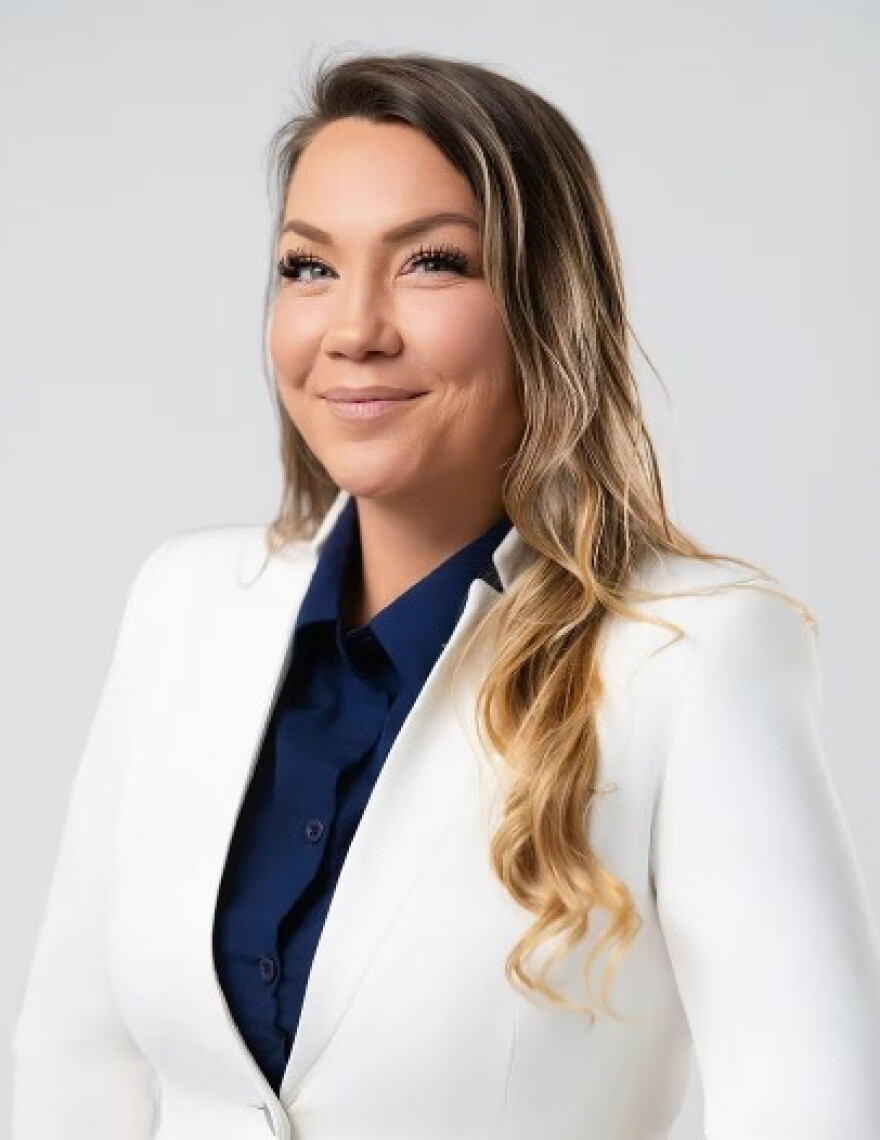 rubiagarcia.com
Lindsay Rubia Garcia (D) Candidate for 6th Congressional District

Abortion/Reproductive health
This is a decision that belongs between a woman, her partner, her doctor, and her faith — not politicians in Baton Rouge or Washington. Louisiana's near-total abortion ban, with no meaningful exception for rape, incest, or a woman's health, has already forced doctors here to delay care and driven ob-gyns out of the state. I support restoring the protections of Roe v. Wade at the federal level so families — guided by their own conscience and beliefs — get to make that decision, not the government.
Carbon Capture Sequestration and Eminent Domain
I support real investment in reducing carbon emissions, but I don't support using eminent domain to hand private CO2 pipelines and injection-well companies the power to take Louisiana land against a family's wishes — full stop. If a landowner doesn't want a CCS project on their property, that's their right, and no company chasing a federal tax credit should be able to override it.
And there's a deeper hypocrisy I won't let slide: the same industry collecting billions in federal tax credits because carbon capture supposedly proves they're serious about climate change is, in the same breath, lobbying for legal immunity from lawsuits over the damage that same climate change causes. Climate change is real enough to collect a check on, but apparently not real enough to be held accountable for. You don't get the tax credit and the liability shield.
Coastal restoration work in LA
South Louisiana loses a football field of coastline roughly every hour, and that's not an abstract statistic here — it's our storm buffer, our fisheries, our communities. I'll fight to protect and grow RESTORE Act and GOMESA funding and make sure the Coastal Protection and Restoration Authority's master plan gets the sustained federal backing it needs, not one-time grants that dry up.
Data Centers
I welcome the investment in communities, but only when it delivers mutual benefit — not just to the company. Any incentive package needs binding local job creation guarantees, and those need to be permanent positions, not just a temporary bump during construction. I also support creating a capital trust fund sized to the number of permanent jobs created and their salaries, to act as a financial backstop protecting those jobs and the community's investment if a company underdelivers or pulls out. And it needs fair-share cost-sharing for grid upgrades and full transparency on water and power use — not deals struck behind an NDA with no community input.
Federal Regulation of AI
We need a clear, consistent federal framework for AI — covering safety testing, data privacy, and protections for workers whose jobs are disrupted — rather than a patchwork of 50 different state rules that helps no one but the biggest tech companies. Regulation should be written with input from workers and consumers, not just the industry it governs.
FEMA reform
Anyone who's lived through Katrina, Ida, or the storms since knows FEMA's process is too slow when people need help fast. But we can't talk about FEMA reform honestly without acknowledging that storms are getting more frequent and more intense — that's not a talking point, it's what our insurance bills and flood maps already tell us. Reform has to be built for the world we're actually living in: faster individual and public assistance, a flood insurance program with premiums that are affordable and accurate, and real investment in rapid response — pre-positioned teams and coastal response fleets that can move within hours of a storm passing, not days. I'll fight any effort to dismantle or defund the agencies Gulf Coast families depend on every hurricane season, but "don't break it" isn't enough — FEMA needs to be built for the storms coming, not just the ones we've already survived.
Immigration enforcement
I support real border security paired with a workable path to legal status for people who've been contributing to our communities for years. But security can't come at the cost of basic human dignity or due process — every person, regardless of immigration status, is entitled to constitutional protections before the government takes their liberty or their life.
What happened to Renee Good and Alex Pretti — both killed by federal agents, with the government initially refusing to even release the agents' names — is exactly why I'd introduce what I'd call the Pretti-Good Civil Rights Act: legislation giving families like theirs the right to sue federal agents in court when those agents violate someone's constitutional rights, closing the loophole that currently lets federal officers hide behind near-total immunity. If ICE and Border Patrol agents operate with no real check on deadly force, that's not security — that's a blank check.
Offshore drilling for oil and gas
Oil and gas has been part of Louisiana's economy and my constituents' livelihoods for generations, and I won't pretend otherwise. I support strong safety regulation in the wake of Deepwater Horizon and oppose reckless expansion of new leases in sensitive Gulf waters. And I want serious federal investment in diversifying our coast's energy economy — offshore wind, grid modernization, and resilient-infrastructure jobs — so our workforce has a real bridge to what comes next, not a promise that depends on companies getting a blank check on eminent domain or liability protection first.
Should members of Congress be prohibited from owning/trading stock?
Yes. I support a ban on members of Congress owning or trading individual stocks — no blind-trust loopholes, no waiting until you're caught. I signed on to [pledge name — flagged below], and I'd extend that same standard to a lobbying ban: members shouldn't be able to walk straight from Congress into a lobbying job pushing the same industries they used to regulate. There should be a real cooling-off period, not a revolving door.
Should elected officials be allowed to sign NDAs?
This is happening in Louisiana right now, not hypothetically. Governor Landry signed an NDA with Meta himself and required NDAs from more than 120 state employees and over 50 elected officials tied to data center negotiations. Congresswoman Julia Letlow signed an NDA with Meta and then bought company stock without timely disclosure — exactly the kind of conflict voters are right to be angry about.
NDAs don't belong anywhere near decisions this size. Communities are finding out about massive industrial and data center deals only after they're already signed, with no chance to weigh in on water use, tax breaks, or environmental impact — and this isn't unique to Louisiana; it's the same playbook companies like SpaceX and Meta use everywhere. I support requiring public disclosure and real community input before any major economic development deal is finalized, and I don't think elected officials should ever sign an NDA that keeps their own constituents in the dark about decisions affecting their community.
If you’ve held office before, what legislation are you most proud of and why?
This is my first campaign for elected office.
What will be your top three priorities in office?
- Economic Affordability — wages that keep up with the cost of living, affordable health care and insurance, housing people can actually afford, protecting Social Security, and real jobs with a future, not just a temporary boom.
- A Government Accountable to the People — rule of law, real oversight and checks and balances, protecting voting rights, environmental justice for landowners facing eminent domain for CCS projects, and ending the practice of negotiating major deals behind NDAs with no community input.
- Guaranteed Health Care for Every American — I support a system that guarantees health coverage as a right, not a privilege tied to your job or your paycheck. Too many families in this district are one diagnosis away from bankruptcy, skipping medications because of the cost, or driving past three hospitals that have closed in rural Louisiana to find care. A system that covers everyone, negotiates drug prices instead of letting corporations set them, and takes the constant fear of losing coverage off the table isn't radical — it's what every family deserves.
The following candidates did not respond to a questionnaire sent by WWNO/WRKF:
Monique Appeaning (R)
- St. George
- Former aide to Sid Edwards, Mayor-President of Baton Rouge and East Baton Rouge Parish.
- appeaningforcongress.com
Rufus Craig (L)
- Baton Rouge
- Attorney
Larry Davis III (R)
- Denham Springs
- Declined to comment on his profession
- larrydavisforcongress.com
Rick Edmonds (R)
- Baton Rouge
- State Senator since 2024
- State Representative from 2016 - 2024
- Chair of Senate Education Committee
- rickedmonds.com
Michael Mebruer (R)
- St. Francisville
- Traveling medical professional
- mebruerforcongress.com
Blake Miguez (R)
- New Iberia
- State Senator since 2024
- State Representative 2015 - 2024
- House Majority Leader 2020 - 2024
- blakemiguez.com
Stephen Wagley (R)
- Baton Rouge
- Chief Operating Officer of Delta College
- wagleyforcongress.com