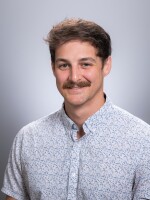
Louisiana Lt. Gov. Billy Nungesser says he’s been left in the dark on some of the state’s biggest economic development deals.
Dozens of state officials and agencies have signed nondisclosure agreements under Gov. Jeff Landry, including on Meta’s Hyperion data center in Richland Parish. The practice extends into the governor’s office, where more than 100 employees also signed NDAs.
Nungesser, the state’s second-in-command, signed an NDA for the LIV Golf tournament, which was ultimately canceled after the company filed for bankruptcy.
In a conversation with Gulf States Newsroom’s Drew Hawkins at his Metairie office, Nungesser discusses the NDA he signed, how the Landry administration pushed the practice and why he thinks the public deserves to know what the state gives up to land these deals.
The following conversation has been edited and condensed for clarity.

DREW HAWKINS, BYLINE:
Gov. Landry signed a nondisclosure agreement with Meta, Rep. Julia Letlow signed one and dozens of state officials and agencies have signed them too. This extends to other projects and industrial developments. From your understanding, how and why are NDAs being used under the Landry administration?
BILLY NUNGESSER: I don’t have a lot of information. As I get asked around the state how much water these projects will use or what the electricity deal is, I’ve been making public requests, and I can’t get any information.
I met with Louisiana Economic Development Secretary Susan Bourgeois, and they wouldn’t give me anything in writing. She told me the data center up in Richland isn’t going to use any more water than farmland. I asked, how much farmland? We don’t really know. Then I asked about the rumors that the electrical deal is a five-year deal with the company building it, and that if they close in five years, we could have to absorb the cost of electricity. She couldn’t really talk about that. I guess that’s part of the NDAs.
HAWKINS: As lieutenant governor, you’re second in command, and you’re having to ask for information. Is that how it normally works?
NUNGESSER: No. The last governor I worked with, I met with him every month. We’d talk about a lot of things, some confidential, some public, but I was never asked to sign an NDA.
I was asked to meet with Greg Norman about the LIV Golf event. He picked City Park and told me he was going to put up $7 million to improve the course and put on a tournament. All he needed from us was to make sure we got a crowd there. I said, if you’re going to spend $7 million, I’ll absolutely get your crowd. We’ll promote it.
Then I was kind of excused from a later meeting. “You can go.” That was a little weird. Weeks later, the governor announced he was giving LIV Golf $7 million, and I didn’t understand why we were putting up the money.

HAWKINS: Walk me through the process of the NDA you signed. Was it just part of a stack of paperwork put in front of you?
NUNGESSER: It was a one-sheet. “We need you to sign this because we’re negotiating for this tournament and we don’t want other states to slip in and get it.” So to meet with Greg Norman, I agreed to sign that one-pager.
HAWKINS: Did that seem abnormal at the time?
NUNGESSER: It was kind of weird because I’d never done that before. But I understand doing it for a big deal, so word doesn’t get out to a neighboring state while you’re negotiating. Once they announced the tournament, though, I felt like that was null and void. I didn’t read it in detail, probably should have, and it’s the only one I’ve ever signed.
As I go around the state and speak, I feel a little dumb not being able to give the public answers.
HAWKINS: At the Lieutenant Governors’ Conference in Dallas, you asked Meta about NDAs. What happened?
NUNGESSER: Meta and Amazon spoke, and I asked a question about the NDAs. Some of the representatives from Texas stood up and said they don’t sign NDAs; they weren’t familiar with signing any NDAs for their data centers in Texas. The guy from Meta said it was required by our governor. It wasn’t Meta that requested it. I guess we were trying to keep it quiet because the governor didn’t want other people to steal the project.

HAWKINS: Why would Landry want NDAs?
NUNGESSER: In defense of signing it, I’d say it’s so that while you’re negotiating, another state doesn’t swoop in and get the deal. That seems to be what the economic development team is telling people. But once the deal is signed, I had hoped they would open up and let us know what the tax incentives are and what the electrical deal is.
What are we giving away, and is it going to benefit us long term? The construction jobs, people selling food, that’s absolutely a good thing. But is the tax base going to support the schools, the infrastructure improvements, the drainage, the sewage, the water for the influx of people? Those are questions I don’t know the answers to, and a lot of the public would like to know.
We’ve got a lot of full-page ads in the paper bragging about all these projects. It would be nice to see a full-page ad that says, “This plant’s coming, here’s the tax incentives we had to give them, here’s the long-term benefit to Louisiana.” The balance of what we give away and what we get should be made public.
HAWKINS: Under previous governors, it was common for LED to sign NDAs with companies. What’s new is elected officials, from state legislators to school superintendents, signing them. Should local elected officials be signing agreements that keep them from sharing information with constituents?
NUNGESSER: I come from the school where the local governments should be at the table negotiating the deal. They’re going to have the burden of the water, the sewage, the roads, the schools, the infrastructure, the crime. With more people comes more crime. So they should be comfortable with the tax breaks, to know they’re going to get enough local taxes, not just from the employees, to cover what they’re going to endure from the influx of people. I’m not sure these deals were done that way.
Richland Parish being a poor parish, I think they were just glad to get it. I don’t know if the local people really got a seat at the table. So I’m in the dark on it.

HAWKINS: In Richland, Vermilion, Bossier and Caddo, I’m hearing the same reaction across party lines. People don’t like the idea of their elected official signing a document that prevents them from sharing information.
NUNGESSER: Take the water in Richland Parish. Is this going to drain that water table and cause a crisis in years to come? We don’t know. But the people involved in that project have all had to sign NDAs not to disclose what they’re working on. It’s the unknowns that have people worried.
Same with SpaceX. I think it’s a great project. The only information we got was that they were paying $20 million a year to help with infrastructure. I don’t know what tax base we gave up, whether we gave it all up or got a portion. Is there going to be enough tax base, besides the jobs, to benefit Louisiana long term? The unknowns are what scare everybody.
HAWKINS: What about environmental concerns and quality of life impacts for the people where these projects are being built? Richland Parish residents have talked about air quality and water impacts even before the projects are finished.
NUNGESSER: We’re concerned. I believe in full disclosure. There are going to be some down things we have to be prepared for, and we should know them. I hosted the National Park Conference in New Orleans, and a guy from the park service in Texas talked about a rocket that went the wrong way and blew up over his parks. He said they did come in and clean up everything at their expense. That made me think: do we have an agreement that they’ll take care of those problems, or does that fall on the Louisiana taxpayer?
There are risks with everything you do. You take the good with the bad, but we just need to know what that is. It’s the unknowns that scare the hell out of people.
HAWKINS: Louisiana has a history of companies and politicians coming in, making big promises, cutting deals behind the scenes and the promises don’t always materialize. How do NDAs fit into that legacy?
NUNGESSER: It makes people doubt what kind of deal we cut. If this data center in Richland closes in five years, are we going to pay an increased electrical bill? Nobody knows. We need to know what deal was cut on the electrical.
The governor signed an executive order saying they can’t put the burden on local government. That doesn’t matter if we already have a contract with Meta. It’s not worth the paper it’s written on if we’ve already cut a deal. What’s the deal we cut? Why can’t those contracts be made public? It doesn’t make any sense to me.
HAWKINS: If you could go back, would you sign the NDA again?
NUNGESSER: No. The paper I signed doesn’t say it was just for the golf tournament, and I didn’t even think of that at the time. I walked into the meeting; it was there, and they said, “We need you to sign this so no one else gets this golf tournament.”
Looking back, it wasn’t necessary. I just couldn’t understand why we were giving them $7 million.
HAWKINS: Do you think this might change? Other states, like California, have outlawed NDAs with elected officials.
NUNGESSER: I tell people that most public officials, not all, care about one thing: reelection. Next year is an election year, so hopefully we’ll see some protections put in place. If we’re going to protect the public, next year is the year to do it, because right after the legislative session they’ll be asking the public to vote for them. The public ought to watch what happens in Baton Rouge and hold our elected officials’ feet to the fire.
I’d like to see something where, the minute a deal is signed, the public knows everything. Unless there’s a security reason or a real chance of losing the deal to another state, there would have to be a very specific reason not to disclose what Louisiana is on the hook for long term.
HAWKINS: How about just, outright, no NDAs? With the competitive argument, if you silo off elected officials in one location, they can’t talk to each other. Louisiana can’t see what Mississippi is offering, what Texas is offering. And in Texas, you said they don’t use them.
NUNGESSER: I haven’t been involved in negotiations, so I can see it in certain instances. But not as a blanket thing, where it seems like we’re signing them for a golf tournament and for all these projects.
If we passed something saying that the minute the deals are done, the public gets to know all the deals that were cut, it would give people comfort that their elected officials are representing them. Right now, people are shaking their heads, wondering what’s in these deals that we don’t know about.
This story was produced by the Gulf States Newsroom, a collaboration between Mississippi Public Broadcasting, WBHM in Alabama, WWNO and WRKF in Louisiana and NPR.